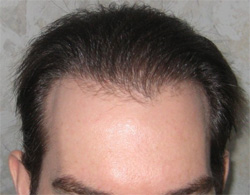
 People who experience hair loss on their scalps may benefit from a hair transplant. Men with male pattern balding, for example, lose hair from the front and top of the scalp, while their hair on the sides and back of their heads remain. Continue reading
Hair Loss Genes & Hair Loss Products
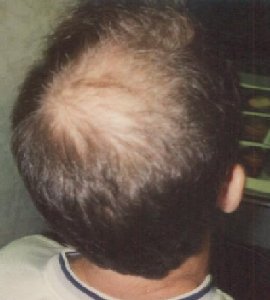
Too Many Hair Loss Products?
Just turn on your TV or pick up a magazine and you will see products that are advertised as hair loss cures. Many years ago people would try all kinds of ridiculous treatments hoping to cure their hair loss. But some are still willing to try anything on the outside chance that it will help.
Continue reading
Miami Dade Special Olympics 2009
Leave a reply
Dr. Larry Shapiro
recently attended the 2009 Miami Dade Special Olympics at the Biltmore with one of our patients, Sgt. Jeff Lampert. It was a great event – very inspiring and very entertaining with special olympic athletes, some glamour (Miss Florida and a fashion show) and great work by the firefighters from Miami and a very special patient of ours, Sgt Jeff Lampert who went our hair transplant miami clinic a few years ago.

The Biltmore Hotel, Site of 2009 Special Olympics

Dr. Larry Shapiro and
Firefighter Sgt. Jeff Lampert

Gold medalist Gary Hall, Miss Florida Megan Clementi, & Firefighter Sgt Jeff Lampert
Hair Transplant Side Effects
 Most patients will experience little to no side effects of a hair transplant. Most, such as minor discomfort can be treated with either prescription or over the counter pain medications. It is common to feel a tightening of the area in the back of the head where the donor site was removed. This usually subsides within the first few days.
Depending on how well the patient adhered to the pre-operative instructions (such as avoiding vitamin C or aspirin), there may be some minimal swelling to the facial area. Most patients will be prescribed medication to prevent swelling so this side effect is much less common. However, if swelling does occur it usually only lasts for several days, is completely painless and can be alleviated with the use of ice and elevation of the head.
As the patient heals from the procedure they can experience moderate itching of the scalp. This is actually a good sign that the grafts are healing appropriately. The doctor will provide instructions as to when you may start shampooing and using a topical ointment to help with this condition.
As you can see there are minimal side effects to a surgical hair transplant and as with any other surgery the benefits far outweigh any temporary inconvenience.
What is Hair Loss?
 Everyone sheds some hair every day. How much is normal? The average is about 100 hairs per day. These hairs grow back. Some people lose more than 100 hairs each day, and these hairs do not grow back. This is called “hair loss.”
Some hair loss occurs as people age. This is normal. Most hair loss is due to androgenetic alopecia. Androgentic alopecia appears to have a genetic component, because it typically runs in families.
Male pattern balding is quite common. It involves hair loss at the front and top of the head. Sometimes, the hair that is unaffected is called a “wreath,” because it is on the back and sides. The hair follicles on the back and sides are genetically pre-programmed to keep their hair, except for normal daily hair loss.
Female pattern hair loss is different. Typically, women do not lose all their hair. Usually, their hair loss is affects the entire scalp, and is not isolated to the top and front. (Technically, it is possible for men to experience female pattern hair loss, but it is unusual.)
Testosterone levels increases with age in males and females. Testosterone has an indirect effect on the hair follicles, causing them to shrink. The scalp’s membranes get thicker and have less blood flowing. The hair follicles degenerate, and the hair falls out. This hair does not grow back on its own. Since men produce more testosterone than women, they have more hair loss problems.
Hair loss can have other causes, including:
- disorders, such as hypothyroidism, fungal infections, and other diseases (consult a doctor)
- stress
- certain medications, chemotherapy or radiation
- sudden hormonal changes
- certain vitamins, if taken in excess
- hair styles that tug on the hair
- perms and other hair treatments
- pregnancy (temporary)
Therefore, it is crucial to consult a physician if one experiences hair loss. An underlying cause may be treatable, and hair loss can be the first signs of serious illness.
Treatments for androgentic alopecia include addressing the hair style, taking certain medications specifically proven to treat hair loss, applying proven topical treatments, and hair transplants.
Of these options, the hair transplant is the only permanent solution. Hair transplants remove some healthy hair follicles (from the back and sides of men’s scalps; from a viable location on women’s scalps) and transplant them to the thinning and balding areas. A good hair transplant doctor who performs many of these surgeries can make the transplanted hair look very natural. These hairs grow like normal hairs, and are permanent.