Send your photos for a free consultation.

Starting as low as
$2-$3 fu/graft!

I want to talk to someone about restoring my hair.


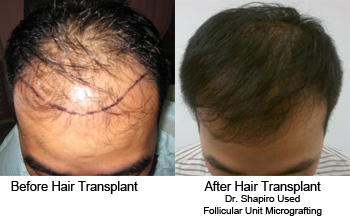
before
Before

After
After

Is it Scalp Psoriasis or Simple Dandruff?

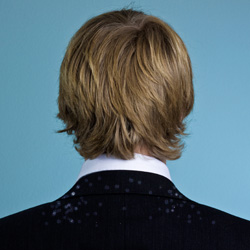
dandruff or scalp psoriasis can cause embarassing flaking onto clothingYour head is itchy and flaking. Small balding patches are showing up on your scalp. Your hair always looks dirty, and you can’t wear black anymore. And you’re trying one dandruff shampoo after another. Is this a simple case of dandruff, or is it something more serious?
Approximately half of the 7.5 million Americans who have psoriasis specifically have scalp psoriasis. They may also have psoriasis on other parts of their body.

Scalp psoriasis appears as red, raised and sometimes scaly patches on the scalp, and can spread to the back of the neck, behind the ears, or the forehead. This condition is not contagious and its cause is not truly known. It may be caused by the immune system growing skin cells too quickly. The skin cells build up as patches that are itchy and flaky.


Continue reading: “Is it Scalp Psoriasis or Simple Dandruff?”

Dr. Larry Shapiro, Top Florida Hair Transplant Physician, to Lecture in Orlando at A4M about Help Hair Shake and in Rome, Italy about S.H.A.P.I.R.O. Chart

Dr. Larry ShapiroLeading Florida hair transplant physician Dr. Larry Shapiro, inventor of nutritional supplements Help Hair® Shake, Help Hair® Vitamins, Shampoo and Conditioner, has been invited to give presentations at The American Academy of Anti-Aging Medicine (A4M)’s 20th Annual World Anti-Aging Congress May 17-19 in Orlando, FL, and at The Future of Hair Restoration and Regenerative Medicine at the 25th International Congress of Italian Society of Hair Restoration (ISHR) in Rome, Italy on May 24-27, 2012.

Dr. Larry Shapiro is one of the few physicians who will lecture about the diagnosis and prevention of hair loss at the American Academy of Anti-Aging Medicine (A4M)’s 20th Annual World Anti-Aging Congress May 17-19 in Orlando, Florida. He will introduce the S.H.A.P.I.R.O. Chart, which shows the biochemical pathways involved in hair loss. This chart helps physicians give patients a “Low Anabolic Profile” to help reduce hair loss. He will discuss research on how anabolics — such as anabolic steroids, DHEA, Andro, growth hormones, creatine, and Whey Protein Isolate — can trigger or aggravate hair loss. And he will introduce his newest product to the Help Hair® line, ShakeMD Whey Protein Concentrate — a nutritional supplement that contains nutrients selected for working out and healthier hair. Over 800 patients have used Help Hair® Shake and products successfully to help reduce hair loss and help hair grow in more quickly after a hair transplant.


Continue reading: “Dr. Larry Shapiro, Top Florida Hair Transplant Physician, to Lecture in Orlando at A4M about Help Hair Shake and in Rome, Italy about S.H.A.P.I.R.O. Chart”

Bioengineering Hair? Hair Loss Treatments Could Result from Organ Replacement Research

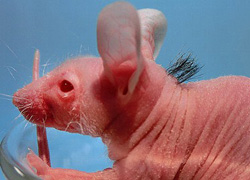
hairless mouse bioengineered to grow hair

The hairs on the neck of this hairless mouse were bioengineered

Scientists in Japan have conducted animal research that may result in treatments for balding within a decade, using bioengineered stem cells. A study in Nature Communications described how experimental organ replacement regenerative therapy research resulted in hair growing on bald mice.

In the study, stem cells from hair follicles of typical mice were implanted into the skin of bald mice. Within 2 to 5 weeks, most of the hair grew in. These hairs behaved normally, in that they followed the hair growth cycle (growth, shedding, dormancy, regrowth). The scientists tested this by pulling out hair to see if it would re-grow, and it did. Just like natural hair , the hairs that resulted from the transplants made connections to nerves and muscles under the skin.


Continue reading: “Bioengineering Hair? Hair Loss Treatments Could Result from Organ Replacement Research”

Researchers Identify a Protein that Causes Hair Loss – Prostaglandin D2

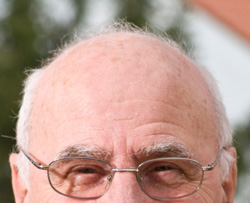
Typical male pattern baldingA key protein that causes male pattern balding has been identified by researchers. This could lead to hair loss treatments that stop balding, and maybe even reverse it.

The journal Science Translational Medicine published research from the University of Pennsylvania that pinpointed which genes are activated when men begin to experience male pattern balding. This type of balding, also known as androgenetic alopecia, is extremely common, and is caused by a genetic predisposition and hormones – specifically, testosterone (T). It usually begins in the middle years, and 80% of men have hair loss by the age of 70. Androgenetic alopecia causes hair loss on the top and front of the scalp, leaving a “wreath” of hair around the back and sides of the head.

Early-onset male pattern balding may be triggered by consuming products that alter hormones, such as anabolic steroids, whey protein isolate, andro, Creatine, DHEA, and GH (growth hormones).


Continue reading: “Researchers Identify a Protein that Causes Hair Loss – Prostaglandin D2″

Creatine Anabolic Hair Loss Case Study

hair loss from creatineThis is a case study of a 29-year-old balding male who came to Dr. Shapiro’s Hair Institute and was screened for anabolic use with the S.H.A.P.I.R.O. Chart. This man used creatine, a popular workout and athletic supplement that helps grow muscle and reduce fat. His hair loss was similar to male pattern balding, with some important differences.

Twenty-nine is a young age to have this much balding from an inherited sensitivity to testosterone/DHT. We might call this early-onset male pattern balding. The balding pattern was different because:

  1. The hair loss happened suddenly, then stopped. When he was 17, he took creatine for 6 months, and experienced hair loss six or eight months later. Then the hair loss stopped and he had no additional hair loss since.
  2. His hair loss has a very even, diffuse thinning pattern throughout his head.
  3. The texture of the hair is unusual in the crown and front of the head – the male pattern balding (MPB) area that is sensitive to DHT. This is the part of the scalp would be more sensitive to hormonal changes, if this subject is genetically prone to male pattern balding. The tips of the hair in this area are slightly frizzy, as if slightly singed by a candle. This hair is not quite as frizzy-looking as hair damaged by hypothyroidism.

This case study is very typical of hair loss from anabolic supplements. There is an even distribution of hair loss with the same amount of scalp showing throughout the MPB areas.
Continue reading: “Creatine Anabolic Hair Loss Case Study”